A Different Way of Looking at Gymnastic Exercises

A Different Way of Looking at Gymnastic Exercises

Since exercises have several different properties at the same time, they can belong into several different categories at the same time. It always depends on which aspect you want to focus on at the moment.

And just because you think of an exercise as highlighting the use of the outside aids, for example, doesn’t mean that you don’t need to use the inside aids at certain moments.

It’s important to keep in mind that these categorizations are neither absolute nor are they mutually exclusive. An exercise can fulfill more than one gymnastic purpose. But categorizing the exercises according to their gymnastic effect can help us understand a problem or design a custom exercise to address an issue we have identified.

Why Are Weight Shifts Important?


Why Are Weight Shifts Important?


Balance is not a static, equal weight distribution of the horse’s weight over all 4 “corners" of his body, but it is the ability, to redistribute the weight quickly and smoothly from any one corner to any other, or from one side to the other, because only then can the horse move smoothly in a small space.

If a horse is not able to redistribute his weight easily, he will become stiff and clumsy and you feel like you’re having to manoeuvre a large ship around a small swimming pool. By contrast, when the horse is truly balanced, you feel like you’re sitting on a ball that you can roll in any direction any time.

Working With Horses Coming Back From An Injury

Working With Horses Coming Back From An Injury

When you are working with a horse that is coming back from an injury, you can use dressage exercises to help him recover. Of course, this is more challenging than regular dressage because there is always a risk of re-injury. There are a few things to consider that can help you in the rehabilitation process. The following list can be applied to sound, healthy horses as well, of course, but it’s even more important with horses that are recovering from an injury.

How do I teach a square halt?

How do I teach a square halt?

A square halt in which both hind legs are underneath the body, the weight is distributed evenly over the support base, and the horse is round, elevated, and light, is something that many riders struggle with. Most horses will leave one hind leg out behind, or they have one front leg farther under the body than the other.

Confront the difficult while it is still easy - Tao te Ching (63)

Confront the difficult while it is still easy - Tao te Ching (63)

As we are learning to ride and train, we sometimes encounter big problems that seem to appear very suddenly, and we wonder: what happened??!! Everything was going fine, and all of a sudden, the horse is acting up. Maybe he suddenly stopped and refused to go forward, from one day to the next. Maybe he started turning around for no discernible reason. Maybe he started to rear or buck. In some cases, the reason is pain-related. But in some cases, the extreme reaction is the final stage in a longer process. The rider kept making small mistakes with her seat and aids that the horse didn’t like. So he started to react in small ways at first. Maybe he pinned his ears in certain situations, or he lost some impulsion, or he became more crooked, or he inverted. But when the rider didn’t notice the subtle warning signs and didn’t change what she was doing, the horse had to send out larger and larger signals. Some riders only get the message when they get bucked off. But by that time they have missed hundreds of smaller warning signs over a period of several months. And once the horse is so annoyed that he bucks or rears, the problem has become very serious.

Are You Using the Short Side of The Arena?

Are You Using the Short Side of The Arena?

Are you using the short side of the arena or are you merely waiting for it go by so that you can get to the “interesting stuff”? When I was young I had no appreciation for the short side with its two corners as a gymnastic tool. It wasn't until much later that I discovered how valuable the short side and its corners really are from a gymnastic point of view.

How do I find the right working tempo?

How do I find the right working tempo?

A steady tempo (beats per minute) that is neither too fast nor too slow for the horse is the foundation of balance - together with correct arena patterns. That’s why it is the first element of the training scale. A steady tempo allows the horse to find his longitudinal balance. Accurate arena patterns that are performed in functional straightness (i.e. the horse’s feet are aligned so that the left pair of legs is on the left side of the line, the right pair of legs is on the right side of the line, and the spine forms a segment of the line) allow the horse to find his lateral balance.

The Leg-Weight-Rein Connection

The Leg-Weight-Rein Connection

When I was riding the other day, I remembered a quote from Nuno Oliveira: “When the horse resists against the left rein, try to replace the left rein aid with your left leg.”

My horse had started out a little stiff on the right that day, and I could feel it coming from the right hind leg through my right seat bone, and I could feel the same stiffness in the right rein. This is a crookedness issue: the contact in the right rein felt heavier and harder than I liked because the right hind leg wasn’t stepping under enough. This usually also means that the horse supports too much weight with his right front leg.

Why does my horse invert in transitions?

Why does my horse invert in transitions?

If the horse inverts in transitions, there are several possible causes. Some of them have to do with the horse, some of them have more to do with the rider. Transitions are always susceptible to mistakes because the footfall and the balance have to change.

Transitions, Transitions: Simple, but not easy

Transitions, Transitions: Simple, but not easy

The way the horse performs transitions to the halt and from the halt tells us a lot about his training. Many horses and riders struggle with these transitions. Half halts often don’t go through in down transitions, so the horse inverts or curls up. The halt isn’t square, the horse is crooked, to name just some of the most common problems.

Dissolving Resistances

Dissolving Resistances

In my own practical experience, I have often observed that resistances in the poll and resistances in the hindquarters tend to go hand in hand, so in order to overcome the problem we need to address the poll as well as the hip.

How To Improve The Horse’s Straightness In The Shoulder-in

How To Improve The Horse’s Straightness In The Shoulder-in

This is a great discussion of how a thinking rider can correct the horse’s attempts to evade the demands of the shoulder-in by using the other lateral movements to bring both hind legs underneath the body. This somewhat indirect approach is much more effective than trying to create the correct bend by pulling on the inside rein, or trying to create a contact on the outside rein by using “more inside leg and more outside rein”, which are so often the standard recommendations of trainers. These direct approaches actually only make the problem worse, whereas the indirect approach teaches the horse better body awareness and it makes the hind legs stronger and more supple, so that he is able to perform a correct shoulder-in easily and without feeling the need to evade.

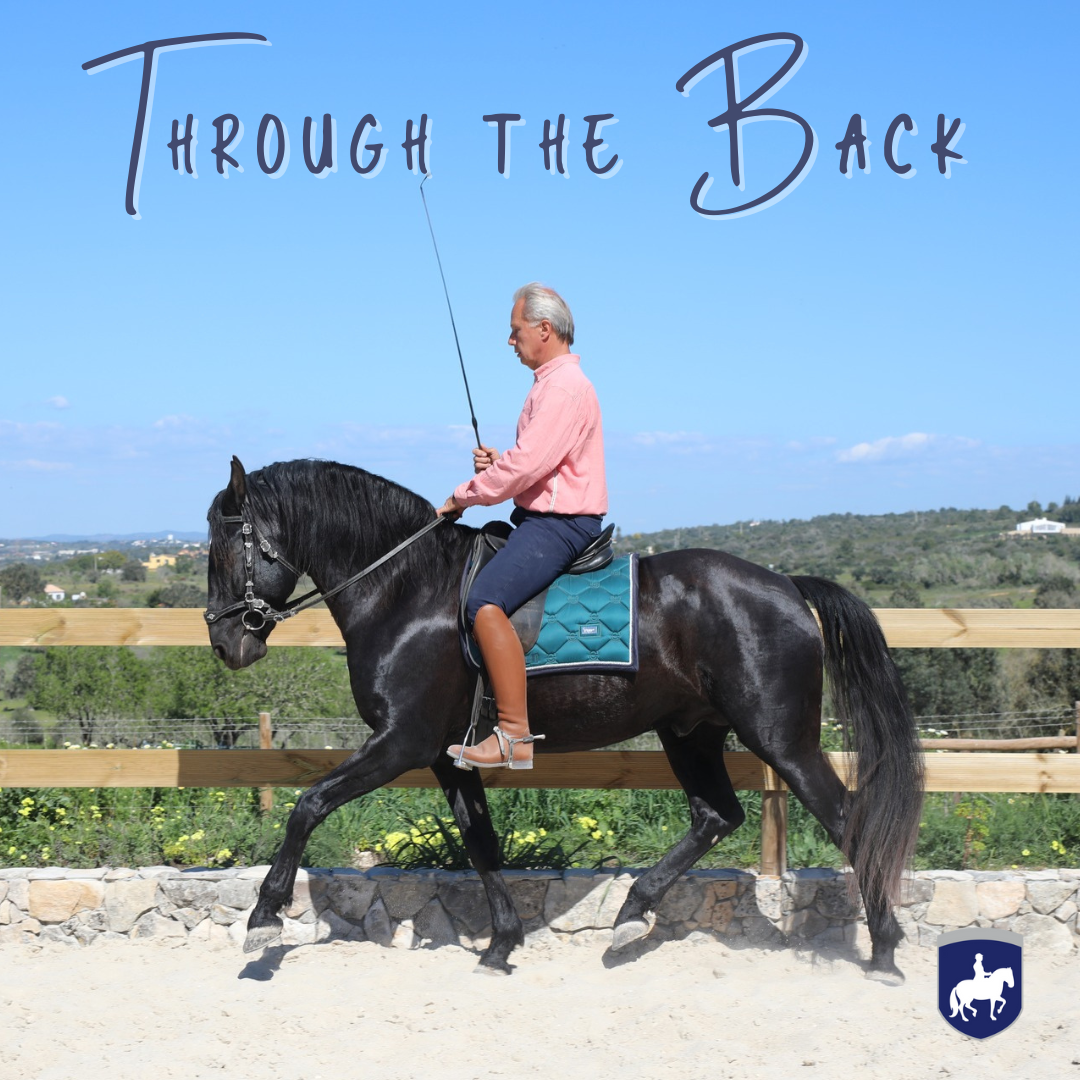
Through the Back

Through the Back

The swinging movement and energy connection that are the result of a horse working properly through the back create a feeling you will never forget. Choose exercises and arena patterns that encourage the horse to engage and flex his hind legs, and remember to use your seat in a dynamic way that supports the horse’s movement, so that he is able to lift his back, engage his hind legs, flex his hind legs, and push off again with them in a forward-upward direction.

8 Habits Of Highly Successful Riders

8 Habits Of Highly Successful Riders

8 habits that will make you a successful rider. If you prioritize the items on this list, you and your horse will progress, slowly but surely. Whenever you feel lost or frustrated, return to this list, check if you have been implementing it or if you have become sloppy with some of these items. If you put one foot in front of the other, you will succeed step by step, even if progress sometimes seems to be painfully slow for all of us.